Bus Simulator 27 Collectibles & Points of Interest
Unlock and explore Felicia Bay's landmarks, nature sites, and historical monuments — on foot, in Sandbox, or between route shifts.
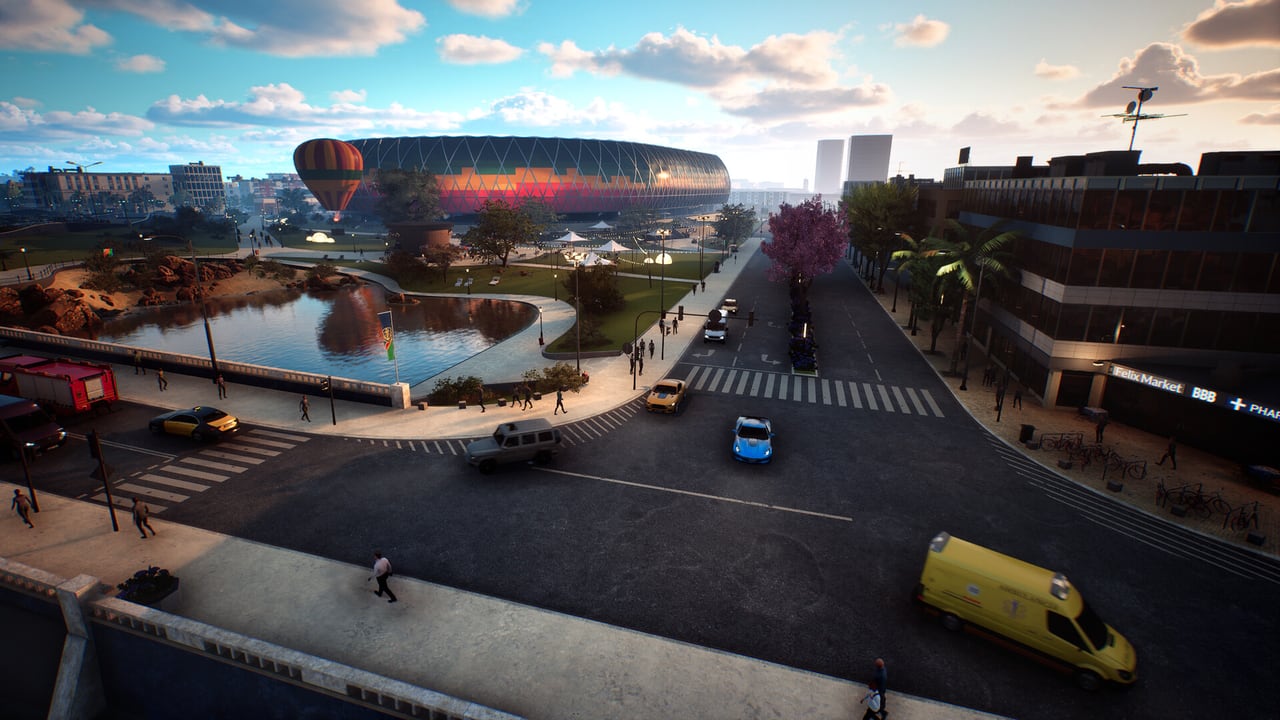
You can leave the bus and walk Felicia Bay to search for points of interest and hidden collectibles. Official materials describe landmarks, nature sites, and historical monuments that unlock when you interact with them — region lore and scenery rewards that sit alongside the company management and route-running that fill most play sessions. This page is the exploration companion for that layer.
Sandbox mode is the official home for collectible hunting: no timetable pressure, no company clock, and no reputation score to maintain while you wander. Story and Career still let you leave the cab — the clock keeps running, but a between-shift walk through a Mequina district costs nothing if the route is on schedule.
What the game describes as collectible
Official copy uses three broad categories without publishing a specific checklist:
Landmarks: notable buildings, structures, and district features in Mequina and Alcaztelar. The coastal city’s architecture, the mountain city’s framing, and the civic structures in each of the 20 districts fall here. Walking the street is how you find them; the game flags interaction points when you are close enough.
Nature sites: the coastal promenade, mountain viewpoints, landscape features, and environmental points of interest distributed across Felicia Bay’s geography. The region is described as sunny and southern European in inspiration — expect Mediterranean coastal scenery, hillside overlooks, and rural paths between the two cities.
Historical monuments: specific named or recognisable structures that exist as explorable nodes. These are the least described of the three categories in public materials, but they are explicitly listed as a collectible type alongside landmarks and nature sites.
How interaction and unlocking works
When you approach a point of interest on foot, the game presents an interaction prompt. Official guidance says these locations unlock when you interact with them, which implies a progression or completion record rather than an instant pickup. Sandbox players are most likely to track a full completion list; Story and Career players are more likely to encounter sites in passing.
The interaction prompt appears when you are within range. WASD to move, Shift to run, Space to jump, and X to leave a passenger seat if you are riding rather than driving — all from the controls default layout.
Why walking matters beyond collectibles
Exploration has a practical use for company management. Before drawing a new route, walk a district for 10 minutes. Pedestrians follow desire lines — diagonal paths across squares, shortcuts through plazas — that do not always match the road network. A bus stop placed at an actual pedestrian crossing point serves more passengers per circuit than one placed by map intuition.
On-foot exploration is also a legitimate way to learn the map before committing to a coach route. The Mequina to Alcaztelar road is visible from the coach, but the pedestrian path between two points in a district is not. Walking the district first builds spatial memory that helps when you are driving a 12-metre vehicle through a junction.
Felicia Bay geography and where to look
Mequina is the coastal city. Expect waterfront architecture, promenade landmarks, and urban nature points along the shoreline. The demo’s City Drive runs through one Mequina district, but the full city has multiple distinct areas across the 20-district region.
Alcaztelar is the mountain twin city. Expect civic monuments, hillside viewpoints, and different architectural character from the coastal city. The coach road between the two cities passes through landscape and intermediate features that are worth a separate pedestrian visit once you have completed the Tourismo legs.
The connecting roads — the published cross-country routes — are a third exploration zone. Mountain passes, coastal approach roads, and the intermediate villages between Mequina and Alcaztelar are described as part of Felicia Bay’s geography and are likely to contain points of interest beyond the two city centres.
Sandbox versus Story and Career
Sandbox is the mode most suited to dedicated collectible hunting. No timetable means you can spend an hour walking Mequina’s waterfront without a route running late behind you. The company fund is unlimited in Sandbox, so there is no economic pressure to stop exploring and return to service.
Story and Career still permit on-foot exploration, but the company clock runs. In Story mode, characters assign contracts while you are away; in Career mode, routes keep running whether you are driving or walking. Treat on-foot exploration in those modes as a between-shift activity — walk when the schedule is stable, not when a route is already behind.
Multiplayer exploration
In 4-player co-op, exploration is a social activity. One or two players can walk a district while others drive. This is most useful when the walking players are mapping desire lines for a new stop placement or checking whether a proposed route change actually passes the pedestrian node that would generate the most passengers.
Exploration in multiplayer does not require all four players to walk simultaneously. Split the session: drivers keep the network running, walkers map the next expansion zone. Reconvene and share what was found before drawing the new line.
What this page will not do
It will not publish a checklist of exact locations. No complete map of interaction nodes has been published by Simteract as of the June 2026 demo window. Forcing a fake list into this wiki would contradict the no-invented-content rule in the project brief. This page describes the categories, the mechanics, and the geographic zones where points of interest are expected to appear, and it will be updated when official materials or confirmed player reports provide specific location data.
Related pages
Felicia Bay has the twin-city geography overview. Controls has the on-foot movement defaults. Sandbox and game modes covers Sandbox as the dedicated exploration mode. Multiplayer has the co-op split between drivers and walkers.
Frequently Asked Questions
Quick answers about Bus Simulator 27.
What types of collectibles exist in Bus Simulator 27?
Official materials describe three categories: landmarks (notable buildings and structures), nature sites (coastal, mountain, and landscape viewpoints), and historical monuments. Interaction unlocks them as you explore on foot.
Can I explore on foot in Story or Career mode?
Yes. You can leave the bus and walk Felicia Bay in any mode. The company clock keeps running, so explore between-route or when the schedule is stable rather than mid-service.
What controls do I use to walk around?
WASD to move, Shift to run, Space to jump, and X to leave a passenger seat. These are the default on-foot bindings from the controls page.
Does walking help my company management?
Yes. Walking a district reveals real pedestrian desire lines — where people actually cross a square or take shortcuts. Use this to place bus stops where passengers genuinely gather, not where the map suggests they should.
Is Sandbox the best mode for collectible hunting?
Yes. Sandbox removes timetable pressure and company funds, making it the most natural fit for dedicated exploration. Story and Career still allow on-foot exploration, but the clock runs.
Will this page have a full list of collectible locations?
No. Simteract has not published a complete interaction-node map. This page describes the categories and zones and will be updated when official or confirmed player-source location data becomes available.