Advanced Tips for Bus Simulator 27
Company management depth, route efficiency, driver happiness, and the Felicia Bay habits that separate a running network from a profitable one.
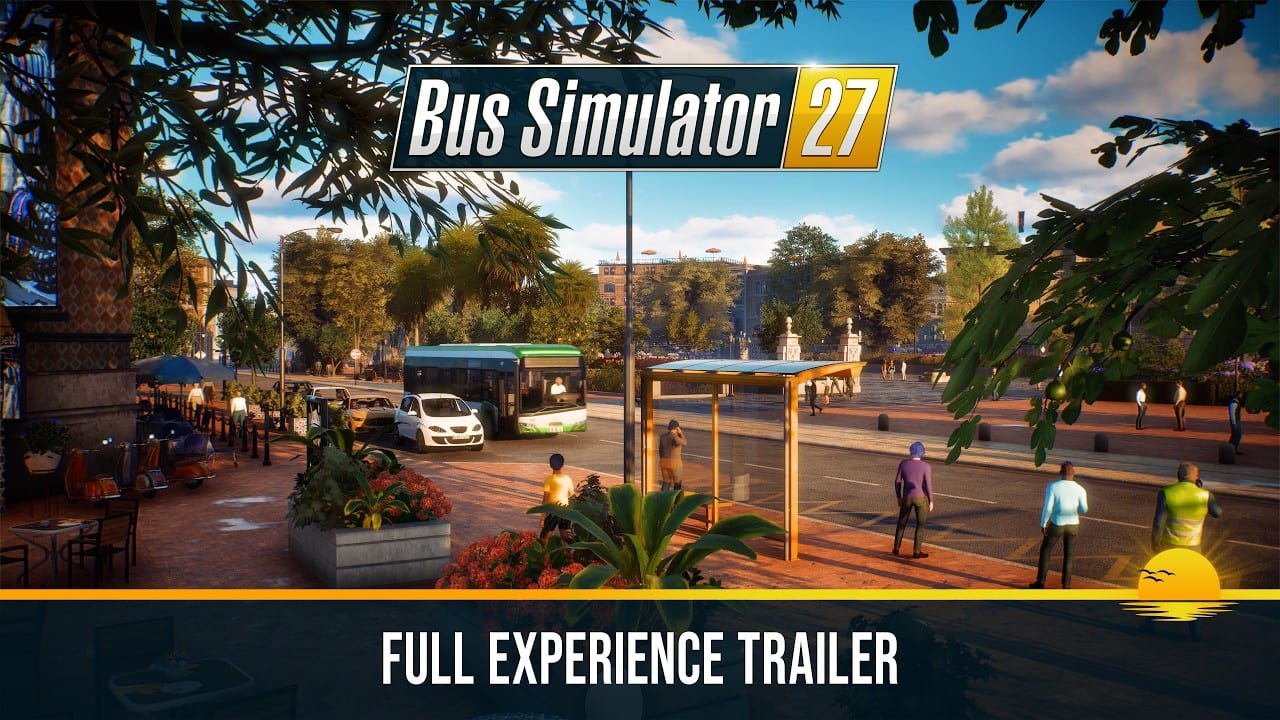
This page collects the company-management layer that the demo cannot teach and that the getting started guide deliberately skips. If you can already start the Solaris Urbino 12 electric, log into the bus computer, serve a city line, and complete one Tourismo leg without checking the controls page mid-journey, you are ready for the systems that turn a running network into a profitable one.
The full game launches 8 September 2026. Year 1 Edition Advance Access starts 3 September 2026. What follows is built from confirmed game mechanics described in official materials and from player reports filed during the June 2026 Steam Next Fest demo window.
Company money and the reputation cycle
The story begins with a transit scandal. Your first contracts are rebuilding public trust, not maximizing profit. That reputation score is the engine of early expansion: low reputation means fewer passengers, fewer passengers means less income, less income means fewer new buses and slower route growth. Repair the reputation before you chase a second fleet.
Official notes describe three interlocking loops: service quality, passenger volume, and company funds. Improving one helps the others. Neglecting one — running on time, keeping buses clean, matching bus size to passenger demand — pulls all three down. The reputation meter is your real dashboard, not the money counter.
Route design beyond the obvious
A good route is not the shortest path between two points. It is the path that matches bus size to passenger volume, serves stops that passengers actually use, and returns to the depot without a 40-minute unpaid gap. Watch where passengers gather before you draw a line. A stop placed at the wrong side of a junction adds a 90-second detour per circuit.
City lines in Mequina need high frequency more than high capacity. A 12-minute loop that runs every 8 minutes beats a 20-minute loop that runs every 5 minutes, because passengers leave the stop rather than wait. Articulated or double-decker buses belong on corridors where a single 18-metre vehicle replaces two rigids — not on a narrow historic district street where the extra length creates junction problems.
Coach routes between Mequina and Alcaztelar are about schedule reliability, not scenic views. Passengers choosing intercity coach over a private car care about arrival time. A Tourismo that runs 10 minutes early is as damaging as one that runs 10 minutes late — other players and NPCs along the route remember both. Use the timetable editor to build in recovery time for mountain grades and coastal traffic.
Bus assignment and driver happiness
Players can hire AI drivers to staff routes. Those drivers have a happiness or fatigue model that affects their performance. A driver on the same city loop for 8 hours will make more small errors — missing a mirror check, closing doors a beat early — than one with a varied schedule. Rotating drivers between short urban turns and longer coach legs keeps the service quality more consistent than keeping the same driver on the same line.
Assigning a coach to a city route, or a rigid electric to an intercity mountain leg, wastes the vehicle’s strength and increases driver stress. The bus type must match the route profile.
On-foot exploration and collectible value
You can leave the bus and walk Felicia Bay to find points of interest and hidden collectibles. Official notes frame this as a parallel activity, not a distraction from company management. Collectibles unlock landmarks, nature sites, and historical monuments — they are region lore, not a separate achievement system disconnected from the map.
Walking is also useful for planning. Before you draw a new route, walk a district for 10 minutes. Find the real pedestrian desire line — where people cross a square diagonally, not along the crosswalk. Put your stop there if the game allows it. A stop placed at an actual walking nexus serves more passengers per circuit than one placed by map intuition.
Multiplayer coordination at scale
In 4-player co-op, the coordination challenge grows faster than the number of players. Four people can cover more of Felicia Bay simultaneously, but only if they agree on mode, route assignments, and who is editing the network. Without that pre-session agreement, duplicate routes, conflicting schedules, and quiet lines nobody is driving become the session norm.
The most useful multiplayer split is not one person per bus. It is one person as network editor who draws and adjusts routes, and the others driving. The editor watches the overall reputation score and tells the drivers where the network is struggling — low satisfaction at a particular stop, a line that is running late, a district that needs a new service. That person also manages hired drivers and fleet purchases, leaving the other three to focus purely on serving lines.
Graphics and performance for city density
Dense Mequina traffic is a GPU stress test that the Tourismo intercity run is not. If your frame rate drops during city work but holds on the coach road, you are hitting simulation load from pedestrian and traffic density, not resolution. DLSS and FSR handle the resolution question. The simulation load question requires either reducing traffic density in settings if that option exists, or lowering simulation quality rather than resolution.
Watch your minimum frame time, not the average. A 60 fps average with 8 fps minimums during a crowded Mequina intersection is worse for driving than a 45 fps average with 38 fps minimums. The second profile is smooth enough to drive through the intersection. The first profile will throw you into traffic you did not see.
Year 1 and what changes the meta
Year 1 DLC will add the Mercedes-Benz Intouro as a coach option and a FlixBus Coach Expansion (reported for July 2027 in press coverage). Those additions will shift the coach fleet ranking. A strategy that works at launch — using the Tourismo as the primary long-distance bus — may need revision once the Intouro and FlixBus options are in the garage.
Do not spend all company funds on launch-week coaches. Keep capital reserved for Year 1 fleet additions. The Intouro is a shorter coach than the Tourismo; it fits tighter city approaches for a long-distance service and may earn its place as a regional connector rather than a mountain-mile hauler.
What to read before this page
If any term above — reputation, timetable editor, driver happiness, route creator — is unfamiliar, read company management first. If starting the bus still requires a controls check, read how to drive before this. This page is not an introduction; it is the next layer.
Frequently Asked Questions
Quick answers about Bus Simulator 27.
What is the most important metric in Bus Simulator 27?
Reputation. It drives passenger volume and income. A high-reputation company attracts more passengers per route, which funds fleet expansion and new lines.
Should I prioritize city or coach routes early?
City routes build reputation fast because they run frequently. Coach routes build income per passenger. Most players establish a city network first, then add intercity legs once capital allows.
How do I avoid drivers getting tired or making errors?
Rotate drivers between short urban turns and longer coach legs rather than keeping them on the same 8-hour loop. Match bus type to route profile to reduce driver stress.
Does walking Felicia Bay improve my company?
Indirectly. Walking reveals real pedestrian desire lines, which helps you place stops where passengers actually gather. It also unlocks lore landmarks and collectibles as region content.
In multiplayer, who should edit routes?
Assign one player as network editor while others drive. The editor watches reputation scores, manages hired drivers and fleet, and directs drivers to under-served areas. This division outperforms four people each doing both.
Should I spend all funds on coaches at launch?
No. Keep capital reserved for Year 1 additions including the Mercedes-Benz Intouro and FlixBus expansion. The Intouro's shorter wheelbase may make it better for regional connector routes than the Tourismo.